
Department of Zoology
Poznań University of Life Sciences
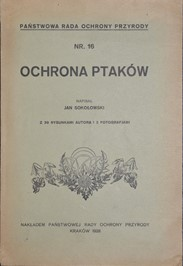
Building on the historical legacy of the Department of Zoology, especially the work of Prof. Jan B. Sokołowski and Prof. Ryszard Graczyk, as presented in what are now considered classic books:


We continue to focus on the scientific foundations of bird conservation. We evaluate the effectiveness of nest boxes and bird feeders in collaboration with one of the largest producers, MKW Workshop: https://www.mkwpracownia.pl
One of our joint ideas—the “Professor” feeder type—is now being used in numerous scientific experiments across various research centers.


Our publications on bird feeders and nest boxes have appeared in top international journals:
Møller, A. P., Tryjanowski, P., Díaz, M., Kwieciński, Z., Indykiewicz, P., Mitrus, C., … & Polakowski, M. (2015). Urban habitats and feeders both contribute to flight initiation distance reduction in birds. Behavioral Ecology, 26, 861-865.
Myczko, Ł., Dylewski, Ł., Sparks, T. H., Łochyński, M., & Tryjanowski, P. (2017). Co‐occurrence of birds and bats in natural nest‐holes. Ibis, 159, 235.
Siekiera, J., Siekiera, A., Jankowiak, Ł., & Tryjanowski, P. (2020). Sexual differences in daily foraging patterns among Great tits Parus major established by radio frequency identification (RFID) tags. Ethology Ecology & Evolution, 32, 87-95.
Tryjanowski, P., Møller, A. P., Morelli, F., Biaduń, W., Brauze, T., Ciach, M., … & Hetmański, T. (2016). Urbanization affects neophilia and risk-taking at bird-feeders. Scientific Reports, 6, 28575.
Tryjanowski, P., Møller, A. P., Morelli, F., Indykiewicz, P., Zduniak, P., & Myczko, Ł. (2018). Food preferences by birds using bird-feeders in winter: a large-scale experiment. Avian Research, 9, 16.
Tryjanowski, P., Skórka, P., & Møller, A. P. (2018). Intra-and interspecific abundance of birds affects detection of novel food sources by Great Tits Parus major. Acta Ornithologica, 52, 221-231.
Zárybnická, M., Sklenicka, P., & Tryjanowski, P. (2017). A webcast of bird nesting as a state-of-the-art citizen science. PLoS Biology, 15, e2001132.
Materials from nest boxes were also included in global-scale analyses of cavity-nesting birds:
Lambrechts et al. (2010). The design of artificial nestboxes for the study of secondary hole-nesting birds: a review of methodological inconsistencies and potential biases. Acta Ornithologica, 45, 1-26.
Møller, A. P., Adriaensen, F., Artemyev, A., Bańbura, J., Barba, E., Biard, C., … & Cecere, F. (2014). Clutch‐size variation in Western Palaearctic secondary hole‐nesting passerine birds in relation to nest box design. Methods in Ecology and Evolution, 5, 353-362.
Møller, A. P., Adriaensen, F., Artemyev, A., Bańbura, J., Barba, E., Biard, C., … & Cecere, F. (2014). Variation in clutch size in relation to nest size in birds. Ecology and Evolution, 4, 3583-3595.
Møller, A. P., Balbontín, J., Dhondt, A. A., Adriaensen, F., Artemyev, A., Bańbura, J., … & Camprodon, J. (2020). Interaction of climate change with effects of conspecific and heterospecific density on reproduction. Oikos, 129, 1807-1819.
Vaugoyeau, M., Adriaensen, F., Artemyev, A., Bańbura, J., Barba, E., Biard, C., … & Cecere, F. (2016). Interspecific variation in the relationship between clutch size, laying date and intensity of urbanization in four species of hole‐nesting birds. Ecology and Evolution, 6, 5907-5920.
We also promote knowledge on responsible bird feeding through traditional and social media, collaborating with local governments, veterinarians, pest control services, and environmental protection agencies. This outreach has led us to publish popular science articles, including:
Dudek K., Tryjanowski P. 2013. Ptaki, które wybrały miasto. Ciemne strony miejskiej awifauny (cz. 2). Biuletyn Polskiego Stowarzyszenia Pracowników DDiD, 2 (73): 33-36.
Dudek K., Tryjanowski P. 2013. Ptaki, które wybrały miasto. Nie zawsze są takie uciążliwe (cz. 1). Biuletyn Polskiego Stowarzyszenia Pracowników DDiD, 1 (72): 27-29.
Dudek K., Tryjanowski P. 2015. Termomodernizacje budynków. Koszmar dla ptaków, problem dla inwestorów. Biuletyn Polskiego Stowarzyszenia Pracowników DDiD, 1 (80): 19-21.
Indykiewicz P., Tryjanowski P. 2015. Dziekie zwierzęta w miastach – dlaczego nie dokarmiać? Przegl. Komunal. 4: 46-48.
Indykiewicz P., Tryjanowski P., Gruss M., Kwiatkowska P. 2015. Ptaki w miastach – estetyka, higiena i zdrowie. Przegl. Komunal. 4: 52-56.
Murawiec S., Tryjanowski P. (2020) Psychiatra patrzy na ptaki w czasie pandemii: pacjenci, obserwacje i interpretacje. Psychiatria i Psychologia Kliniczna: 20: 94–97.
Tryjanowski P. (2019) Zwierzęta w mieście – tak się zaczyna wielka przygoda. Animal Expert 11-12: 57-58.
Tryjanowski P. (2020) Karmnikowe przygody. O ptakach, które zostają z nami na zimę. Biuletyn PANorama 2:10-11.
Tryjanowski P., Wysocki D. 2014. Zimowe dokarmianie ptaków – coraz więcej kontrowersji. Biologia w Szkole 6: 2-5.
Tryjanowski, P., Murawiec, S. (2020) Terapeutyczna moc podpatrywania ptaków. Psychologia w Praktyce III/IV: 62-67.
Our research on bird feeding and nesting has been applied in organizing and promoting a unique nationwide campaign—Sparrow, Come Back!, carried out with the City of Poznań. Example press release: https://gloswielkopolski.pl/wroble-wroca-do-poznania-zainstaluja-300-budek-legowych/ar/12972858
The campaign was featured in numerous other media outlets.
Together with Ultra Architects, we designed a street lamp-integrated nest box: https://poznan.wyborcza.pl/poznan/7,36001,21830978,w-poznaniu-stanely-latarnie-uliczne-w-ktorych-zamieszkaly.html
These projects are currently experimental but may be continued in other cities.
We also compiled practical advice on helping birds and other wildlife in the publication:

http://gorzow.rdos.gov.pl/files/artykuly/14049/RDOS_Gorzow_publikacja_zwierzeta_konfliktowe.pdf
The recommendations have been widely adopted in Polish cities, especially for managing conflict species and during thermal insulation renovations of buildings (likely resulting in thousands of installed nest boxes to compensate for lost nesting niches).
Our staff and PhD students have conducted numerous training sessions for architects, village leaders, and local government officials.
Human Impact and Waste in Bird Biology
Human packaging production has led to increasing presence of plastic and other debris in the environment, significantly affecting bird behavior and nest-building materials. One of the first studies on this topic was based on long-term monitoring of polypropylene string in Great Grey Shrike nests, co-authored by Prof. Piotr Tryjanowski:
Antczak, M., Hromada, M., Czechowski, P., Tabor, J., Zabłocki, P., Grzybek, J., & Tryjanowski, P. (2010). A new material for old solutions—the case of plastic string used in Great Grey Shrike nests. Acta ethologica, 13(2), 87-91.
Inspired by this work, younger researchers began studying waste contamination and its incorporation in nests, particularly in White Storks (Jagiello et al. 2018, 2020), later expanding to other birds (Jagiello et al. 2019):
Urban–forest gradient research on tits (Paridae) with the Urban Evolution and Ecology Lab, University of Warsaw.
Urbanization gradient study on Blackbirds (Turdus merula) at the University of Granada.
Studies on waterbirds, gulls (Laridae), and cormorants (Phalacrocorax) in Poland and Australia (in collaboration with the Kuling Waterbird Research Group, Museum and Institute of Zoology PAS, and University of Tasmania).
Key publications:
Jagiello, Z., López-García, A., Aguirre, J. I., & Dylewski, Ł. (2020). Distance to landfill and human activities affects the debris incorporation into the white stork nests in urbanized landscape in central Spain. Environmental Science and Pollution Research, 27(24), 30893-30898.
Jagiello, Z., Dylewski, Ł., Tobolka, M., & Aguirre, J. I. (2019). Life in a polluted world: A global review of anthropogenic materials in bird nests. Environmental Pollution, 251, 717-722.
Jagiello, Z. A., Dylewski, Ł., Winiarska, D., Zolnierowicz, K. M., & Tobolka, M. (2018). Factors determining the occurrence of anthropogenic materials in nests of the white stork Ciconia ciconia. Environmental Science and Pollution Research, 25(15), 14726-14733.
We also study how birds use human-built structures and anthropogenic food sources for breeding—again with the White Stork as a model species:
Bialas, J. T., Dylewski, Ł., & Tobolka, M. (2020). Determination of nest occupation and breeding effect of the white stork by human-mediated landscape in Western Poland. Environmental Science and Pollution Research, 27(4), 4148-4158.
Tryjanowski, P., Kosicki, J. Z., Kuźniak, S., & Sparks, T. H. (2009). Long-term changes and breeding success in relation to nesting structures used by the white stork, Ciconia ciconia. Annales Zoologici Fennici 46(1), 34-38.
These findings have been shared not only in scientific journals but also in popular science media:
Jagiełło (2018). Dzikie Życie, 4/286.
https://www.czasopismobiologia.pl/artykul/dlaczego-ptaki-wbudowuja-smieci-w-gniazda
https://www.teraz-srodowisko.pl/aktualnosci/smieci-obecne-w-polowie-bocianich-gniazd-4442.html
https://naukawpolsce.pap.pl/aktualnosci/news%2C28838%2Cna-wlasnych-smieciach-motto-bociana.html
Beyond publications, we engage in environmental education. We created a workshop series for primary school children under the “Young Naturalists’ University” titled Birds and Trash.
In 2019 and 2020, over 360 children aged 8–16 participated in 18-hour workshops to learn about pollution and its impact on wildlife.
https://spbaranowo.edupage.org/text/?text=text/text9&subpage=4
http://oswiata.krzemieniewo.pl/news/w-500/projekt-edukacyjny-uniwersytet-mlodych-przyrodnikow